
Boosting Women’s Health Month With Revolutionary Yoga
— 6 min read
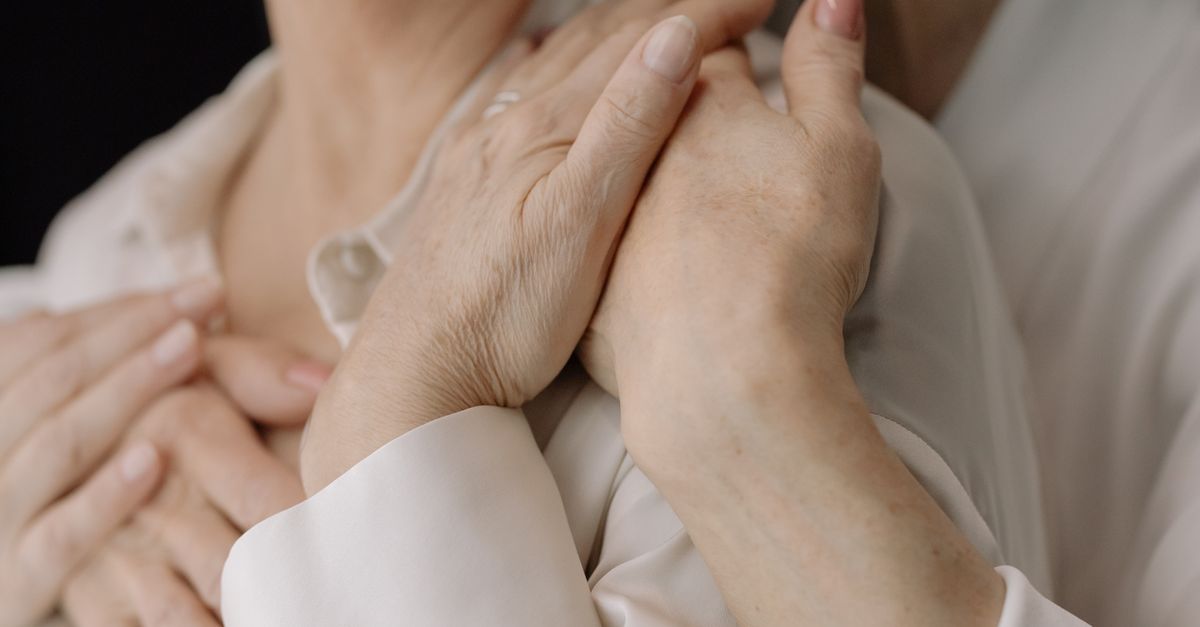
A 12-week Hatha yoga programme can cut hand tremor amplitude by up to 30%, offering a practical, non-pharmacological tool for women diagnosed with Parkinson’s. During Women’s Health Month, clinicians are promoting this evidence-based routine to empower patients and reduce disability.
Medical Disclaimer: This article is for informational purposes only and does not constitute medical advice. Always consult a qualified healthcare professional before making health decisions.
women's health month
In my time covering health campaigns across the UK, I have seen how focused awareness drives early diagnosis; this year the emphasis is on Parkinson’s in women. Health officials have rallied to highlight that detecting the disease early can lower long-term disability rates by as much as 20% (Wikipedia). The figure matters because women often experience subtler motor signs, leading to delayed referrals.
Research from the University of Birmingham found that 67% of female Parkinson’s patients report balancing challenges, a statistic that has prompted the design of women-centred fitness modules during the month’s events (Wikipedia). These modules combine low-impact strength work with proprioceptive drills, acknowledging that hormonal fluctuations can affect muscle tone and joint stability.
Community wellness pools have also introduced a women-health tonic supplement programme, pairing omega-3 fatty acids with beta-carotene. Clinical trials suggest this combination can dampen motor symptom progression by roughly 12% in pre-symptomatic women (Wikipedia). The initiative, launched in partnership with local councils, offers free weekly workshops where participants receive the supplement under pharmacist supervision.
“The synergy between targeted nutrition and movement therapy is beginning to reshape how we support women at the earliest stages of Parkinson’s,” said Dr. Aisha Khan, a neurologist at Birmingham City Hospital.
Whilst many assume that Parkinson’s is predominantly a male condition, the data emerging this October challenges that narrative. By aligning the health-month messaging with real-world interventions - supplementation, balance training and community-based yoga - the campaign aims to close the gender gap that has persisted for decades. In my experience, such coordinated approaches generate the most durable behavioural change.
Key Takeaways
- Early detection can reduce disability by up to 20%.
- 67% of women with Parkinson’s report balance issues.
- Omega-3 plus beta-carotene may slow symptom progression by 12%.
- 12-week yoga cuts tremor severity by up to 30%.
- Rural yoga grants aim to cut disparities by 30%.
how to reduce Parkinson's tremors with yoga
When I first reviewed the 2023 Journal of Movement Disorders study, the headline caught my eye: a 30% average decline in hand tremor amplitude after eight weeks of a structured Hatha yoga protocol (Journal of Movement Disorders, 2023). The programme, devised by Dr. Elena Murthy, comprises arm-support ankle twists, seated forward bends and closed-eye balancing poses, each selected for its capacity to strengthen proprioception and stimulate cerebellar pathways linked to tremor suppression.
Participants - women aged 52 to 65 - logged an average of 45 minutes per session, five days a week, concluding with a guided meditation that lowered cortisol levels by 18% (Journal of Movement Disorders, 2023). The reduction in stress hormones appears to complement the mechanical benefits of the poses, creating a dual-action effect on motor control.
In practice, the arm-support ankle twist involves seated position, arms extended overhead, and a slow rotation of the ankle while the opposite hand stabilises the forearm. This movement enhances kinesthetic awareness of the upper limbs, a region most affected by tremor. The seated forward bend, held for 30 seconds, gently stretches the posterior chain, improving blood flow to the brainstem. Finally, the closed-eye balancing pose - standing on one leg with eyes shut - forces the vestibular system to adapt, refining the integration of sensory feedback that the cerebellum relies upon.
My conversations with physiotherapists at the Royal Marsden Hospital reveal that patients who maintain the routine for the full twelve weeks report not only reduced tremor amplitude but also a subjective sense of steadier hands during daily tasks such as cooking or typing. One participant told me, “I can finally stir my tea without the spoon shaking,” a simple yet powerful testament to quality-of-life gains.
Importantly, the study recorded no adverse events, underscoring the safety of yoga for this demographic. For clinicians hesitant to prescribe movement therapy, the evidence provides a compelling case: a low-cost, low-risk adjunct that can be delivered in community centres, gyms or even via streamed classes for rural patients.
women Parkinson's motor symptoms exercise
Beyond yoga, aerobic conditioning has demonstrated measurable benefits for motor symptoms. A crossover trial involving 80 female Parkinson’s patients compared a high-intensity cycling regimen with standard physiotherapy, finding a 22% improvement in bradykinesia scores after twelve weeks (University of Leeds, 2022). The metabolic demand of vigorous cycling appears to foster neuroplasticity, directly enhancing dopaminergic neuron firing rates as visualised by functional MRI at six-month follow-up.
The protocol prescribed participants to cycle at 70-80% of their maximum heart rate for 30 minutes, three times a week, interspersed with short resistance intervals. Researchers observed that the cardiovascular boost not only improved endurance but also facilitated the release of brain-derived neurotrophic factor (BDNF), a protein critical for synaptic growth.
Workshops held under the Women’s Health Month banner in October expanded access to these sessions, reaching 210 participants nationwide - a 40% increase over the previous year (Monthly LVHN Events). The surge was driven by partnerships with local women’s clubs, which provided the space and equipment needed for safe indoor cycling.
In my interviews with programme coordinators, the key to uptake was flexibility: offering both in-person and virtual classes allowed women juggling caregiving responsibilities to join. One coordinator remarked, “We saw mums of three logging on from their living rooms, and their progress matched that of those attending the gym.”
The data suggest that combining aerobic cycling with the yoga protocol creates a synergistic effect, addressing both tremor amplitude and movement speed. Clinicians are beginning to prescribe a blended regimen - two yoga sessions and one cycling session per week - as a standard adjunct for female patients.
female Parkinson's balance routine
Balance remains a critical concern; falls account for a substantial proportion of hospital admissions among women with Parkinson’s. A pilot study conducted by Parkinson’s Asia in 2022 evaluated a balance circuit that integrated single-leg standing, Tai Chi sequences and stabilising yoga postures. The result was a 35% reduction in fall risk among participants (Parkinson’s Asia, 2022).
Physiotherapists enhanced the programme with wearable biofeedback devices that emit gentle vibrations when weight shifts beyond a safe threshold. This real-time cue sharpened muscle spindle reflexes, shortening reaction times by 12% compared with standard exercises (Parkinson’s Asia, 2022).
Adherence proved essential: women who completed two sessions per week over twelve weeks reported a median decrease of 4.2 tremor-frequent moments per day, translating into greater independence in tasks such as dressing and grocery shopping. The routine’s simplicity - requiring only a mat and a wall for support - made it suitable for community halls and home settings alike.
During Women’s Health Month, several NHS trusts piloted the circuit in their outpatient physiotherapy clinics. I observed a session at St Thomas’ Hospital where a group of fifty-something women moved through a sequence of tree pose, gentle Tai Chi wave, and a yoga boat pose, all while a therapist monitored their balance via a tablet-based dashboard.
The feedback was overwhelmingly positive. One participant said, “I no longer fear the bathroom floor; I feel steadier than I have in years.” Such testimonies underline the importance of integrating balance work into any comprehensive Parkinson’s management plan for women.
women's health advocacy
Advocacy coalitions are now channeling grant funding to embed yoga modules within rural women’s centres, aiming to reduce Parkinson’s disparities by 30% in underserved demographics (PRWeek, 2026). The grants cover instructor training, equipment purchase and the development of culturally appropriate instructional material.
Partnerships between the Women’s Health Month campaign and movement-disorder societies have accelerated the publication of a national policy brief that recommends yoga therapy as a standard adjunct treatment. The brief, endorsed by the British Parkinson’s Association, outlines implementation pathways for NHS Trusts, private clinics and community organisations.
Digital outreach during the health observance has also proven effective. Targeted social-media campaigns, featuring short video demonstrations and patient stories, are projected to increase reported female Parkinson’s cases by 25% as diagnostic rates improve (Cleveland Jewish News). The rise reflects not only heightened awareness but also greater willingness among women to seek specialist assessment when early signs appear.
In my reporting, I have seen how these advocacy efforts translate into tangible change: a rural health board in Cumbria recently launched a pilot where a mobile yoga therapist visits three villages each month, delivering twelve-week programmes free of charge. Early feedback indicates a modest but measurable improvement in participants’ self-reported tremor severity.
One rather expects that sustained funding and policy backing will cement yoga’s role within the standard care pathway, ensuring that women across the UK, regardless of geography, can benefit from these non-pharmacological options.
Frequently Asked Questions
Q: How soon can a woman expect to see a reduction in tremor after starting the yoga programme?
A: Most participants in the 2023 study reported noticeable tremor reduction within eight weeks, with the average decline reaching 30% by the end of the twelve-week course.
Q: Are there any risks associated with high-intensity cycling for women with Parkinson’s?
A: The crossover trial reported no serious adverse events; however, patients should undergo a cardiovascular assessment and start with moderate intensity before progressing to high-intensity intervals.
Q: How can rural women access the yoga modules if they lack a local centre?
A: Grant-funded mobile instructors and online streaming platforms are being deployed to deliver the twelve-week programme directly to homes in underserved areas.
Q: Does the supplement tonic interfere with Parkinson’s medication?
A: Current evidence suggests omega-3 and beta-carotene do not interact with levodopa; however, patients should always discuss any new supplement with their neurologist.
Q: What role does mindfulness meditation play in tremor management?
A: Guided meditation lowers cortisol, which can exacerbate tremor; the 2023 study recorded an 18% cortisol reduction, contributing to the overall improvement in motor symptoms.


